New features and improvements across Ochess, newest first. Every entry links to the place where you can try it.
New
Three new Caro-Kann courses, one of them on purpose unsound
The Caro-Kann is the opening our players meet more often than any other, and until now the
site had a single course on it. There are four now. Black gets a full repertoire against
everything White tries: 3.Nc3 and 3.Nd2, the Advance, the Exchange, the Panov and its
accelerated cousin, the Fantasy, the Two Knights, 2.Nf3 and the King's Indian Attack. White
gets the 3.Nc3 main line, next to the Short System in the Advance that was already here.
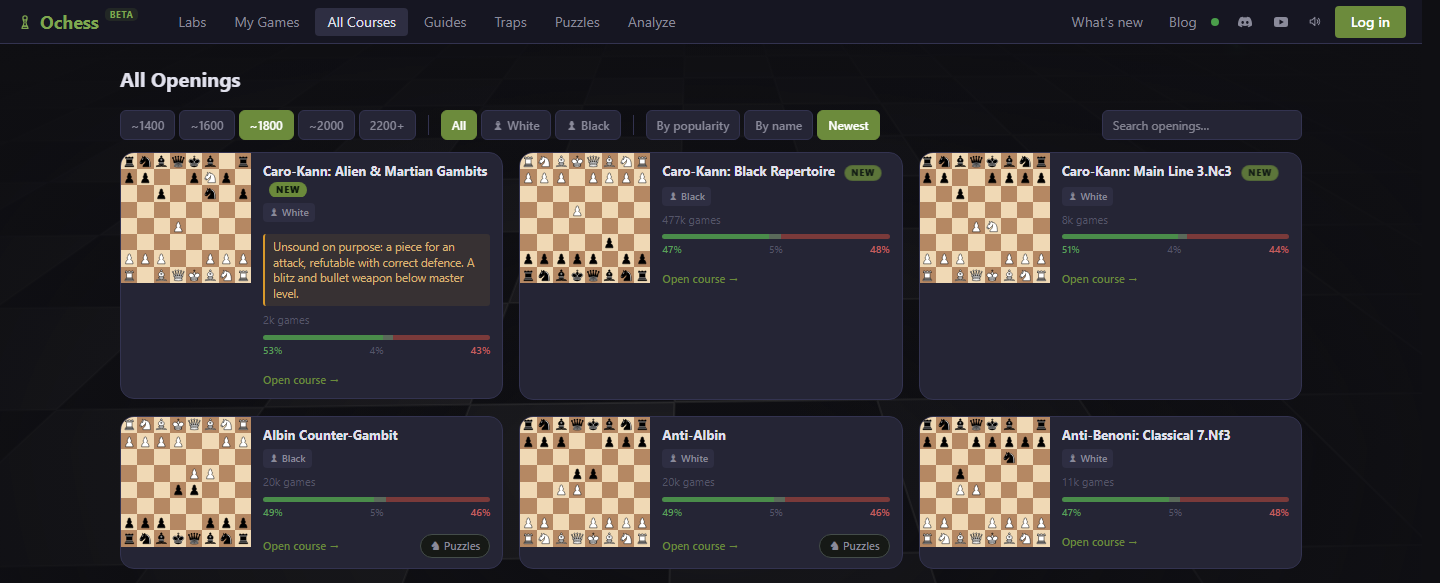
The fourth course is a different animal, and the card says so before you open it. The Alien
and Martian Gambits throw a piece at the Caro-Kann on move six or seven. They are unsound:
play the right defence and Black is simply better, which is why you will not see them in
serious chess. What they do have is practical bite in blitz and bullet at club level, where
the defence is hard to find at the board. That warning sits on the course card and repeats
at the start of every chapter.
Before any of it went up, we replayed every line to its last move and asked the engine what
the position was really worth. Ending a piece down is fine when the attack is winning. It is
not fine when the defence held and nobody mentioned it. The two new repertoire courses came back
clean. In the gambit course fifteen lines did not, and each of them now carries a note on the
move where the attack runs out — better that than quietly cutting the line one move earlier.
Courses are built per rating band, so pick yours in the toolbar. The repertoire courses run
from 1400 to 2200; the gambit course stops at 1800, above which there is not enough played
material to build on. For the first few weeks after a course goes up its card carries a
New badge, and the Newest sort puts the fresh ones on top.
Sorted by Newest: the gambit course carries its warning on the card itself
Twenty-eight new traps, taken out of our own courses
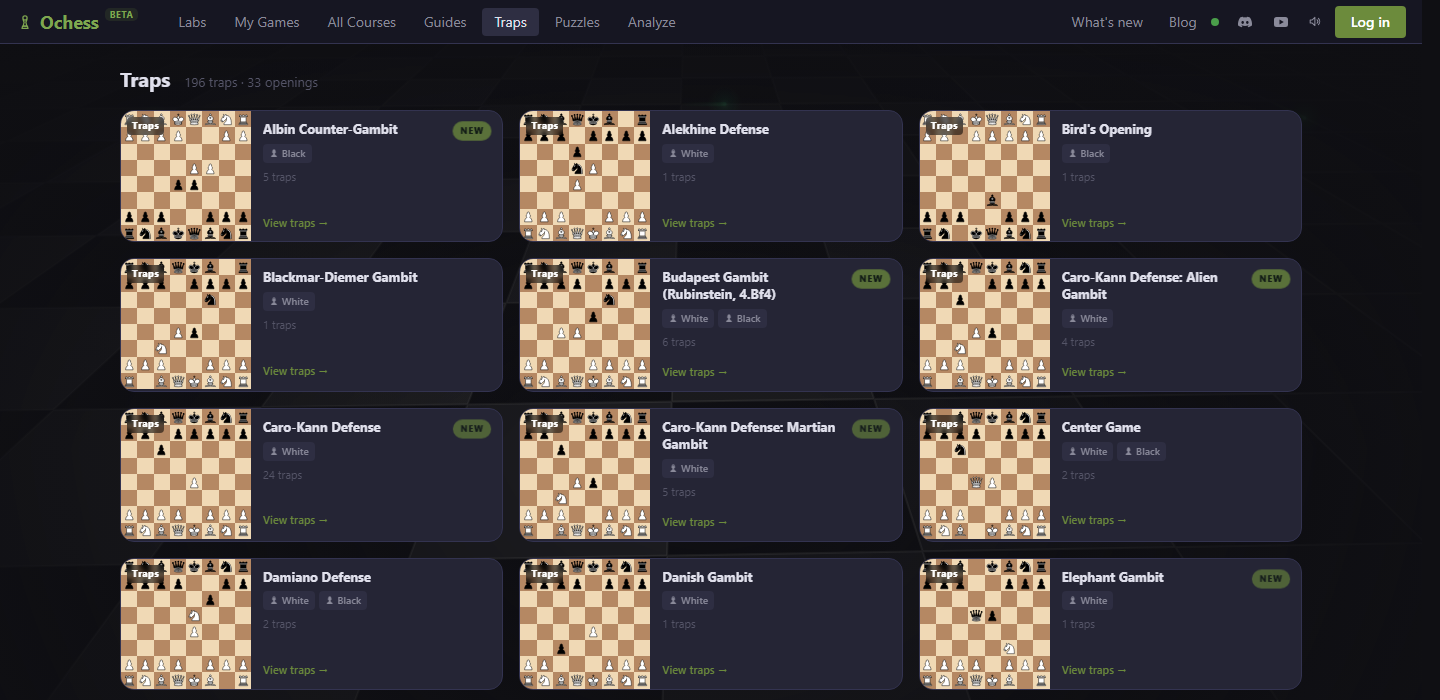
The trap catalogue went from 168 to 196. Three openings that had no traps at all now have
their own pages: the Grünfeld Defense, the Modern Benoni and the Elephant Gambit. The rest
landed in openings that were already there — the Italian, the Scotch, the Budapest, the
Queen's Gambit Accepted, the London and more. For the first few weeks after a batch goes
up, its cards carry a New badge in the catalogue.
They were not collected by hand. Every course on the site is built on a tree of what
opponents actually play, and a move in that tree that loses on the spot is exactly what a
trap is. So we walked the trees, kept the lines where one natural-looking move loses
material or walks into mate, and played every one of them out on a board before writing a
word about it.
Then we measured them. For twenty-six of the twenty-eight the page shows the rating range
where players genuinely fall for the trap, taken from online games rather than guessed —
the other two are left untagged, because the data was too thin to claim anything. Twelve of
the new lines end in mate, the rest win material.
The catalogue after the batch: 196 traps across 33 openings, the new arrivals badged
Every trap page now has a live statistics panel under the move list: what people actually play
in the position, win rates for each reply, and example games — filtered by rating and time
control. The trap's own line is highlighted, and clicking a move plays it on the board.
The rating tags on the catalogue were re-measured too. Each trap shows the rating range where
players genuinely fall for it — taken from online play, not guessed. Some results are
surprising: a few "beginner" traps keep working well past 2000.
The catalogue also keeps growing — the newest additions are Caro-Kann traps, including the
Alien and Martian Gambit lines.
A Martian Gambit trap mid-line: the panel shows what people actually play here, with the trap's own move highlighted in green
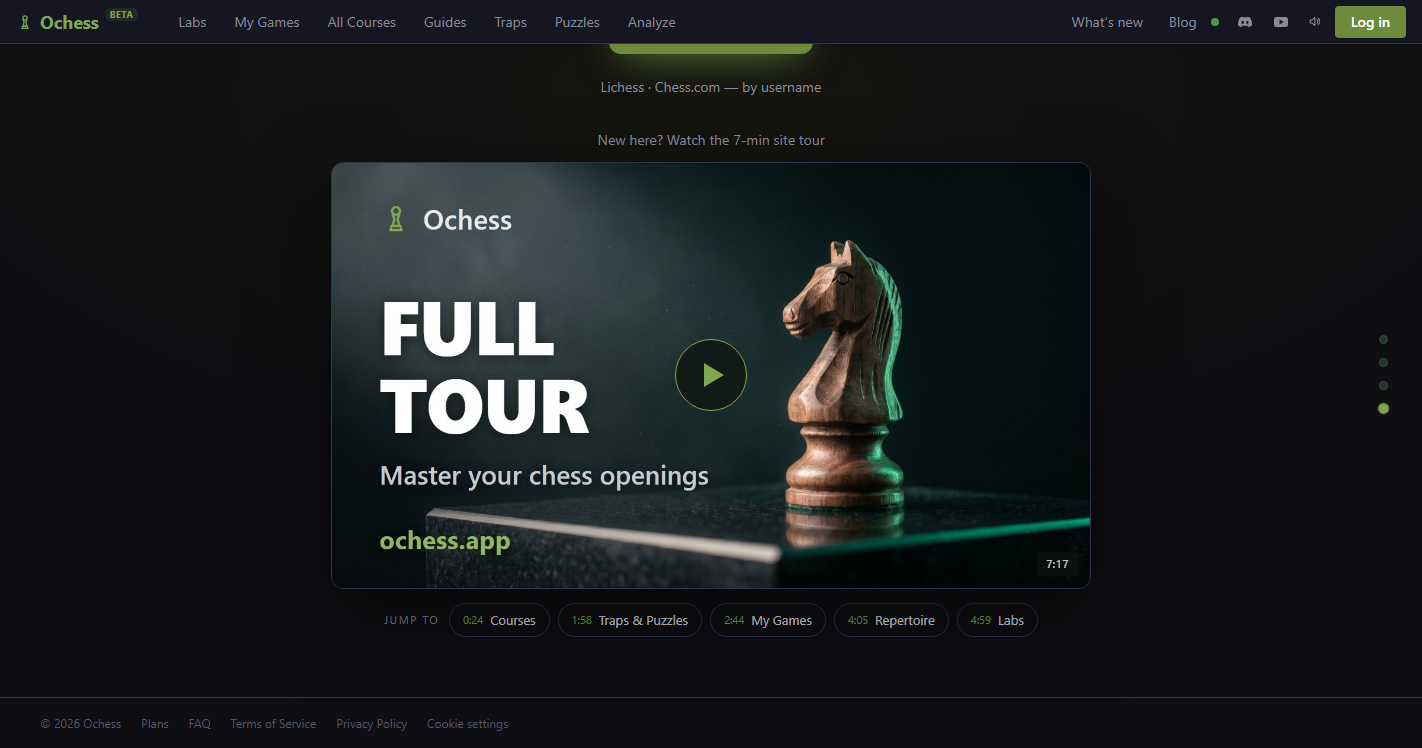
New to Ochess? There is now a 7-minute video tour on the home page: courses, game analysis,
your repertoire, traps, puzzles and labs. It comes with chapter links, so you can jump
straight to the part you care about.
The tour opens right from the home page heroAt the end of the page: the player itself, with chapter links — click 4:59 Labs and the video jumps there
The move list from game analysis — numbered rows, moves centred, variations in brackets — is
now the default in labs, courses, traps and puzzles. One layout to read, wherever you are on
the site.
The same list on a trap page: numbered rows, moves centred, the mistake in red and the correct move called out in green
Improved
Game analysis: the report shows you the line, not just the verdict
Four changes to the game report. All of them work on games you analysed before —
nothing to re-run.
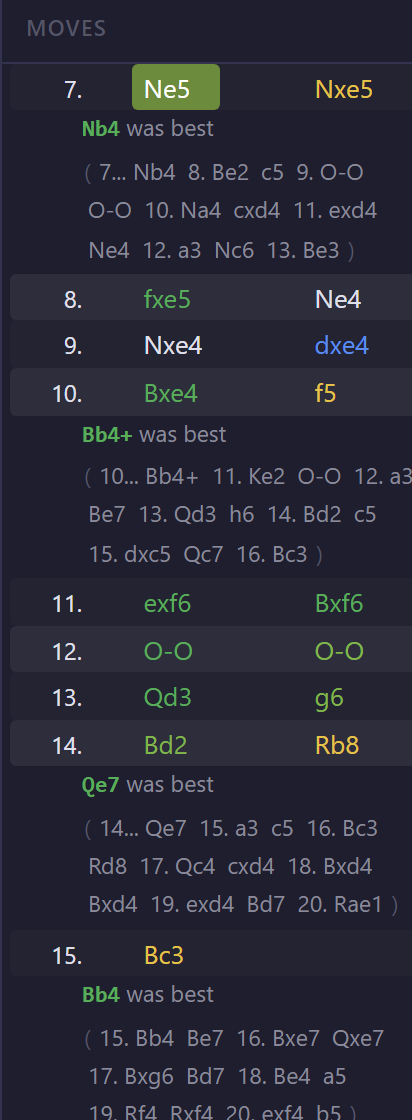
Every mistake comes with a line. Under each inaccuracy, mistake and blunder
you get the move you should have played and how the game could have gone on from there —
about six moves deep. Click any move in that line and the board follows it.
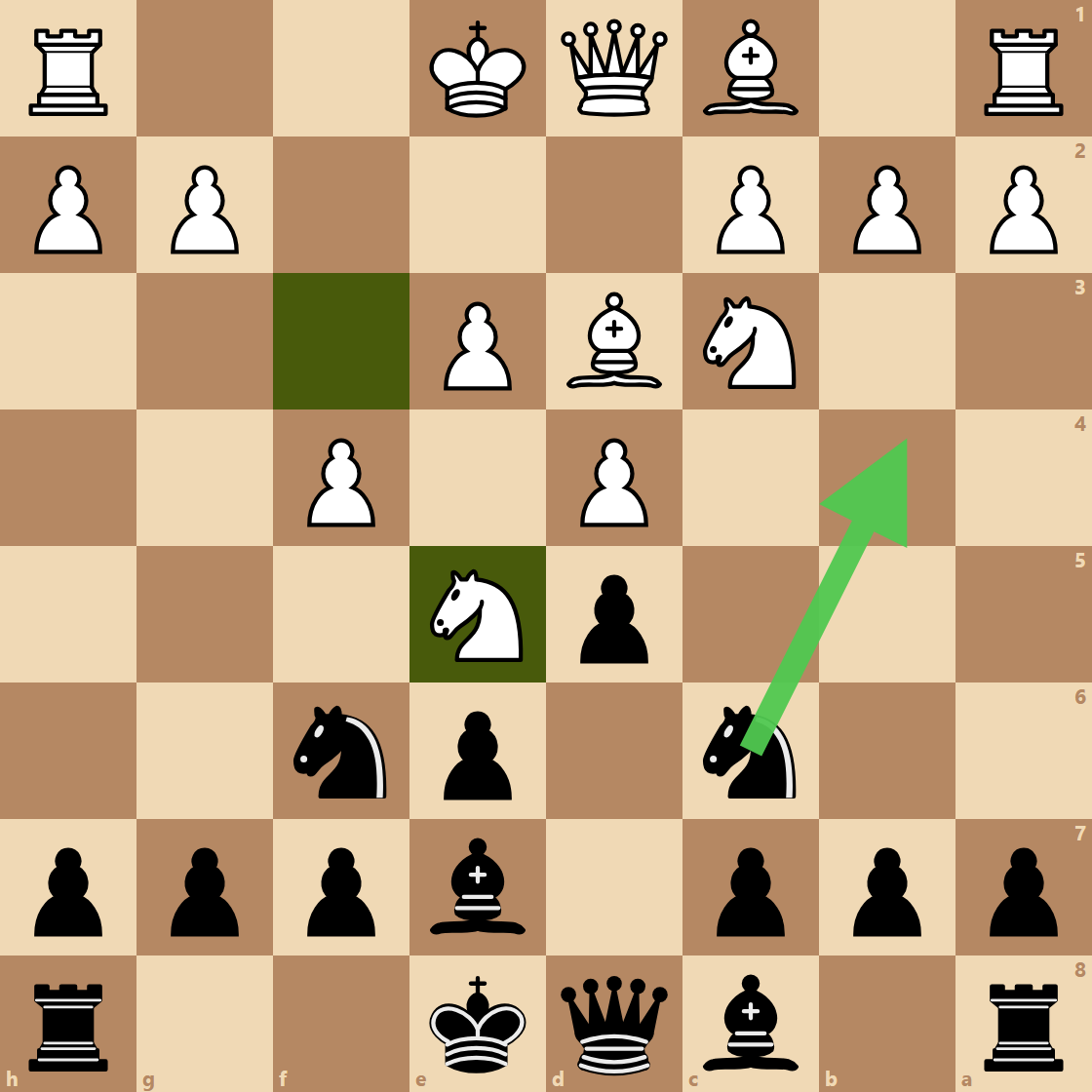
An evaluation bar beside the board. It shows who stands better in the
position you are looking at, and it shifts as you step through the game. Click a
"was best" hint and the board rewinds to the position before the mistake, with a green
arrow on the move you missed.
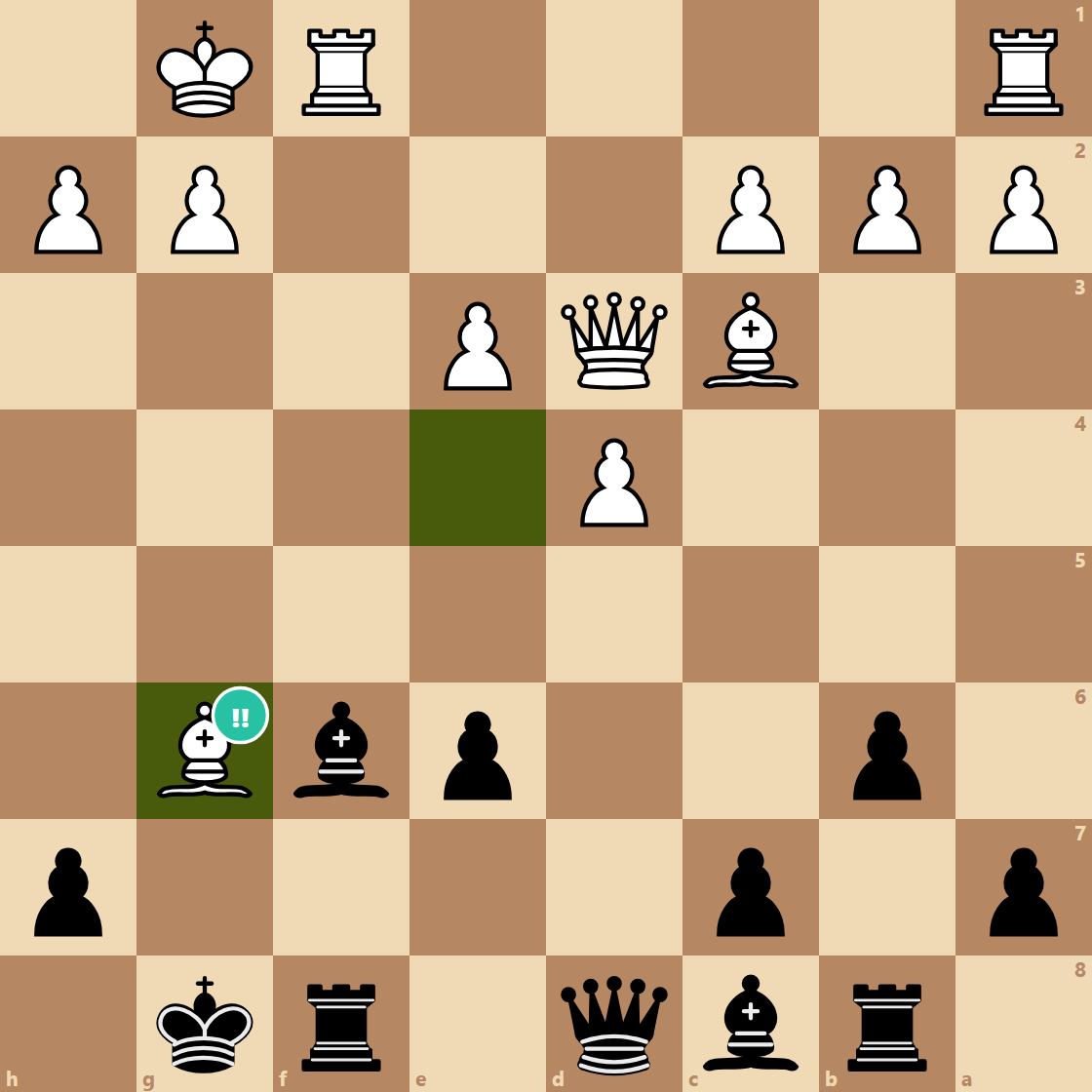
Move grades on the board itself. Every move is graded — Brilliant, Great,
Best, Excellent, Good, Book, Inaccuracy, Mistake, Miss, Blunder — and the symbol sits on
the square you moved to.
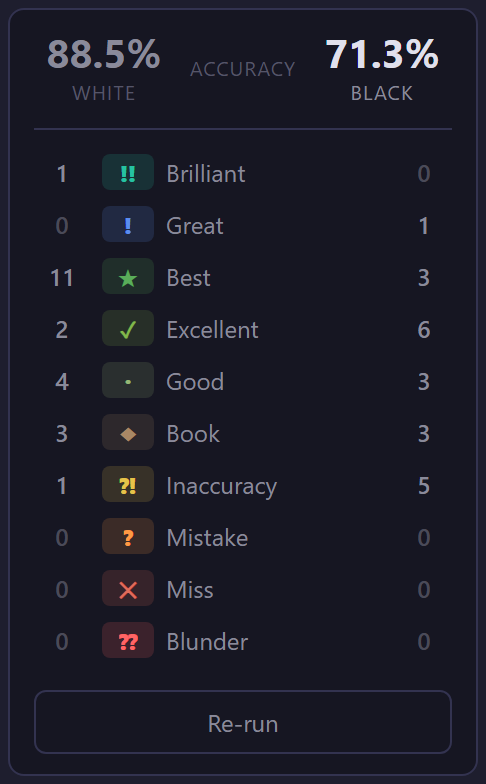
Click a number, walk through those moves. The counts in the summary are
buttons: click the 5 next to Inaccuracy and the board jumps to the first one, then the next.
Click a hint — the board rewinds, the arrow shows what you missedGrades sit right on the destination squareUnder each mistake: the move that was best, and a playable lineThe counters are buttons — click one to walk through those moves
The course catalogue has a search box — it matches opening names and ignores diacritics, so
"grunfeld" finds the Grünfeld — and sorting by popularity or by name. Popularity follows how
often each opening is actually played at your selected rating.
Type "gambit" and the catalogue narrows to the gambit courses — sorting sits right next to the search box
Picking a difficulty range for puzzles is now a single slider with two thumbs instead of two
separate controls. Drag the ends to set the band you want to train in.
Both ends of the range live on one slider — here it is set to 1250–1550, with 259 puzzles in range
The Progress view charts your rating, accuracy, Performance and Maia estimate over time, with
a month-range slider to zoom into any stretch. One point per analysed game, so the chart
reflects the games you actually reviewed.